Registration now open for HCSEC 2026. Register Now!

Innovations & AI, Operations

Smart Language Access: Improving Healthcare Language Access Services Through Technology

Care team using medical interpretation technology to support healthcare language access services in a clinical setting

About This Webinar

Improving healthcare language access services requires seamless communication, reliable interpretation solutions, and workflows that support diverse patient populations across every care setting. By integrating medical interpretation technology and strengthening language access compliance in healthcare, organizations can enhance patient safety, improve understanding, and deliver more equitable care, as presented by Boost Lingo.

If you enjoyed this webinar you can register for upcoming sessions here: https://www.customlearning.com/webinars/

Presented by:

healthcare language access services

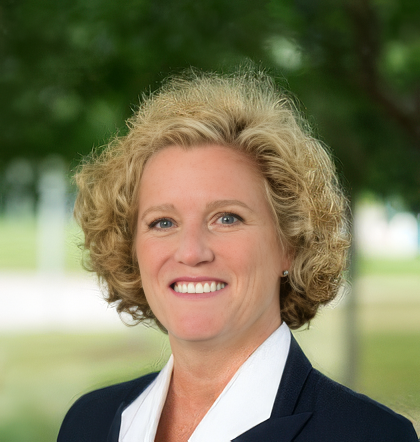
Merrie Wallace

  • Burnout is widespread across healthcare, affecting roughly half or more workers
  • Mental health concerns such as anxiety, depression, and PTSD significantly increased during the pandemic
  • Compassion fatigue is a common and predictable response to prolonged caregiving stress
  • A significant portion of healthcare workers are considering leaving their roles due to burnout
  • Feeling unsupported or unappreciated contributes directly to turnover
  • Self-care is essential for sustainability, not optional
  • Small improvements in self-care can create meaningful impact
  • Emotional empathy alone is not sustainable in high-stress environments
  • Cognitive and compassionate empathy are more effective long-term approaches
  • Leadership plays a critical role in promoting wellbeing and retention
  • Listening, validation, and recognition are powerful and practical support tools
  • Gratitude and acknowledgment improve morale and resilience

Mental Health Status and Related Factors Influencing Healthcare Workers During the COVID-19 Pandemic: A Systematic Review and Meta-Analysis by Jia Huang, Zhu-Tang Huang, Xin-Ce Sun, Ting-Ting Chen, and Xiao-Tian Wu.
You can find it here: https://journals.plos.org/plosone/article?id=10.1371/journal.pone.0289454


Protecting Health and Care Workers’ Mental Health and Well-Being by the World Health Organization (WHO).
You can find it here: https://www.who.int/news/item/25-04-2024-202404_protecthw_mentalhealth

A Systematic Review and Meta-Analysis of Burnout Among Healthcare Workers During COVID-19 by Sulmaz Ghahramani, Kamran Bagheri Lankarani, Mohammad Yousefi, Keyvan Heydari, Saeed Shahabi, and Sajjad Azmand.
You can find it here: https://www.frontiersin.org/articles/10.3389/fpsyt.2021.758849/full

Prevalence and Risk Factors of Burnout Symptoms Among Nurses During the COVID-19 Pandemic: An Updated Systematic Review and Meta-Analysis by Feten Fekih-Romdhane, Frederic Harb, Sana Al Banna, Sahar Obeid, and Souheil Hallit.
You can find it here: https://link.springer.com/content/pdf/10.1186/s12960-025-01012-4.pdf

Prevalence and Correlates of Stress and Burnout Among U.S. Healthcare Workers During the COVID-19 Pandemic: A National Cross-Sectional Survey Study by Kriti Prasad and colleagues.
You can find it here: https://www.thelancet.com/journals/eclinm/article/PIIS2589-5370%2821%2900159-0/fulltext

Compassion Fatigue and Mental Health in Health Care Professionals by Afton M. Erbe.
You can find it here: https://journals.sagepub.com/doi/pdf/10.1177/21650799221081237

Overworked and Understaffed, More Than 1 in 4 U.S. Nurses Say They Plan to Leave the Profession by Melissa Suran.
You can find it here: https://jamanetwork.com/journals/jama/fullarticle/2810568

1 in 4 Healthcare Workers Considering Industry Exit by Kristin Kuchno.
You can find it here: https://www.beckershospitalreview.com/workforce/1-in-4-healthcare-workers-considering-industry-exit-indeed/

Gaps in Mental Health Care-Seeking Among Health Care Providers During the COVID-19 Pandemic by Anthony Papa, John P. Barile, Haomiao Jia, William W. Thompson, and Rebecca J. Guerin.
You can find it here: https://www.cdc.gov/mmwr/volumes/74/wr/mm7402a1.htm

Compassion Fatigue in Healthcare Providers: A Scoping Review by Anna Garnett, Lucy Hui, Christina Oleynikov, and Sheila Boamah.
You can find it here: https://pmc.ncbi.nlm.nih.gov/articles/PMC10693134/

Overview

This session focuses on the importance of self-care, resilience, and empathy for healthcare professionals facing ongoing stress and burnout. Andrew Lewis discusses the impact of compassion fatigue, the growing mental health challenges within healthcare, and practical ways leaders and caregivers can support their own wellbeing while continuing to care for others.

The Current State of Healthcare

Healthcare professionals continue to face unprecedented levels of stress and exhaustion. Many caregivers report worsening mental health, emotional fatigue, staffing challenges, and overwhelming workloads.

Burnout and compassion fatigue have become widespread across healthcare, affecting nurses, physicians, and allied health professionals alike. The session emphasizes that these challenges are not signs of weakness but normal responses to prolonged periods of stress and uncertainty.

Understanding Compassion Fatigue

Compassion fatigue occurs when caregivers invest so much emotional energy into supporting others that they become depleted themselves.

Common signs include:

  • Emotional exhaustion
  • Feeling disconnected
  • Reduced resilience
  • Difficulty maintaining work-life balance
  • Feeling like there is nothing left to give

Recognizing compassion fatigue is the first step toward addressing it.

The Importance of Self-Care

Self-care is not selfish—it is essential.

Healthcare professionals are reminded that they cannot effectively care for others if they continually ignore their own wellbeing. Even small improvements in personal wellbeing can have meaningful impacts over time.

The session encourages caregivers to focus on manageable changes rather than dramatic lifestyle overhauls.

Practical Self-Care Strategies

Self-care can take many forms, including:

Physical Wellbeing

  • Rest and recovery
  • Breathing exercises
  • Physical activity

Emotional Wellbeing

  • Reflection
  • Slowing down
  • Releasing unnecessary stress

Social Wellbeing

  • Setting healthy boundaries
  • Seeking support
  • Staying connected with others

Personal Wellbeing

  • Doing something enjoyable
  • Taking time to recharge
  • Maintaining hobbies and interests

Practicing Sustainable Empathy

Empathy is critical in healthcare, but it must be sustainable.

The session discusses three forms of empathy:

  • Cognitive Empathy – understanding what others are experiencing
  • Emotional Empathy – feeling what others feel
  • Compassionate Empathy – understanding and taking supportive action

The emphasis is placed on cognitive and compassionate empathy as healthier, more sustainable approaches for long-term caregiving.

Supporting Others Through Listening

Simple actions can have a significant impact.

Caregivers and leaders are encouraged to:

  • Ask others how they are doing
  • Listen actively
  • Reflect what they hear
  • Validate experiences

Often, people simply need to feel heard and understood.

The Role of Leadership

Leaders play a critical role in promoting wellbeing and resilience.

Effective leaders:

  • Model self-care
  • Encourage healthy boundaries
  • Recognize employee contributions
  • Foster supportive environments
  • Create opportunities for meaningful connection

Leaders must give people permission to care for themselves.

Recognition and Gratitude

Recognition remains one of the most effective ways to strengthen resilience and morale.

Recognition should be:

  • Timely
  • Specific
  • Genuine

Simple gestures such as thank-you notes, kind words, and public appreciation can have a lasting impact on engagement and wellbeing.

Final Reflection

Self-care, empathy, and resilience are essential for sustaining healthcare professionals through challenging times.

By taking care of themselves, supporting one another, and creating cultures of appreciation and compassion, healthcare teams can emerge stronger, more connected, and better prepared to care for those who depend on them.


Improving healthcare language access services requires seamless communication, reliable interpretation solutions, and workflows that support diverse patient populations across every care setting. By integrating medical interpretation technology and strengthening language access compliance in healthcare, organizations can enhance patient safety, improve understanding, and deliver more equitable care, as presented by Boost Lingo.

Healthcare language access services are essential for ensuring that all patients, regardless of language, receive safe, effective, and equitable care. The “Smart Language Access with Boost Lingo” session highlights the growing need for organizations to adopt modern solutions that support clear communication. When patients cannot fully understand their care, it can lead to confusion, delays, and potential safety risks. Strengthening healthcare language access services helps eliminate these barriers and ensures that patients remain informed and engaged throughout their experience.

One of the most important themes from the session is the connection between communication and patient safety. Miscommunication can lead to errors, misunderstandings, and reduced trust between patients and healthcare providers. Clear communication allows patients to understand diagnoses, treatment plans, and discharge instructions. By improving access to interpreters and communication tools, organizations can reduce risks and improve outcomes across diverse patient populations.

Technology plays a major role in advancing healthcare language access services. Traditional interpretation models often rely on scheduling or limited availability, which can delay communication. Medical interpretation technology, including video remote interpretation and on-demand language platforms, allows providers to access interpreters quickly and efficiently. This immediate access ensures that communication is available at the point of care, reducing delays and improving workflow.

The use of medical interpretation technology also supports consistency in care delivery. When staff have reliable access to interpretation tools, they are more likely to use them regularly. This consistency improves patient understanding and reinforces a culture of accessibility. As technology becomes more integrated into healthcare environments, it helps standardize how communication is delivered across departments and shifts.

Another key factor is workflow integration. Healthcare language access services must be easy to use and embedded into daily operations. When systems are difficult to access or require additional steps, they are less likely to be used consistently. Organizations that prioritize simple, accessible solutions enable staff to provide communication support without interrupting care delivery. This improves efficiency while ensuring patients receive the information they need.

Language access compliance in healthcare is also a critical component. Healthcare organizations are required to meet regulatory standards related to communication and accessibility. Failing to provide appropriate language services can result in compliance issues and reduced quality of care. By investing in structured language access programs and reliable technology, organizations can meet these requirements while improving the overall patient experience.

Patient experience is significantly impacted by communication. When patients are able to understand and participate in their care, they are more likely to feel confident and satisfied. Language barriers can create frustration and uncertainty, while effective communication builds trust and engagement. Strengthening healthcare language access services helps ensure that all patients receive consistent, high-quality communication regardless of their primary language.

Operational efficiency is another benefit of improved language access. Delays in communication can slow down care processes and reduce throughput. By using medical interpretation technology, organizations can streamline communication and reduce wait times. This allows providers to spend more time focusing on patient care rather than coordinating interpretation services, ultimately improving both efficiency and satisfaction.

Leadership and organizational commitment are essential for sustaining language access improvements. Leaders must support the adoption of technology, reinforce expectations, and ensure that staff are trained to use available tools effectively. When leadership prioritizes communication and accessibility, it creates a culture where language support is seen as a standard part of care rather than an exception.

Ultimately, healthcare language access services are a key component of delivering equitable, high-quality care. By leveraging medical interpretation technology and strengthening language access compliance in healthcare, organizations can create systems that support both patients and providers. These efforts not only improve understanding and safety but also contribute to a more inclusive and effective healthcare environment.

Organizations that invest in smart language access solutions are better positioned to serve diverse communities, improve patient outcomes, and meet evolving expectations for care delivery. With the right tools and strategies in place, healthcare organizations can transform communication and ensure that every patient receives the care they deserve.

Join our upcoming webinars

Turning Strategy into Action: A Real-World Service Excellence Journey

Beyond the Hire

Beyond the Hire: Building a Workforce That Stays

The Weight of Your Words: How Leaders Shape Culture Through Language

Interested in learning more?

Contact Us.

FAQ Form