Registration now open for HCSEC 2026. Register Now!

Growth & Strategy, Operations

Empowering the ED: Improving Emergency Department Efficiency and Patient Flow

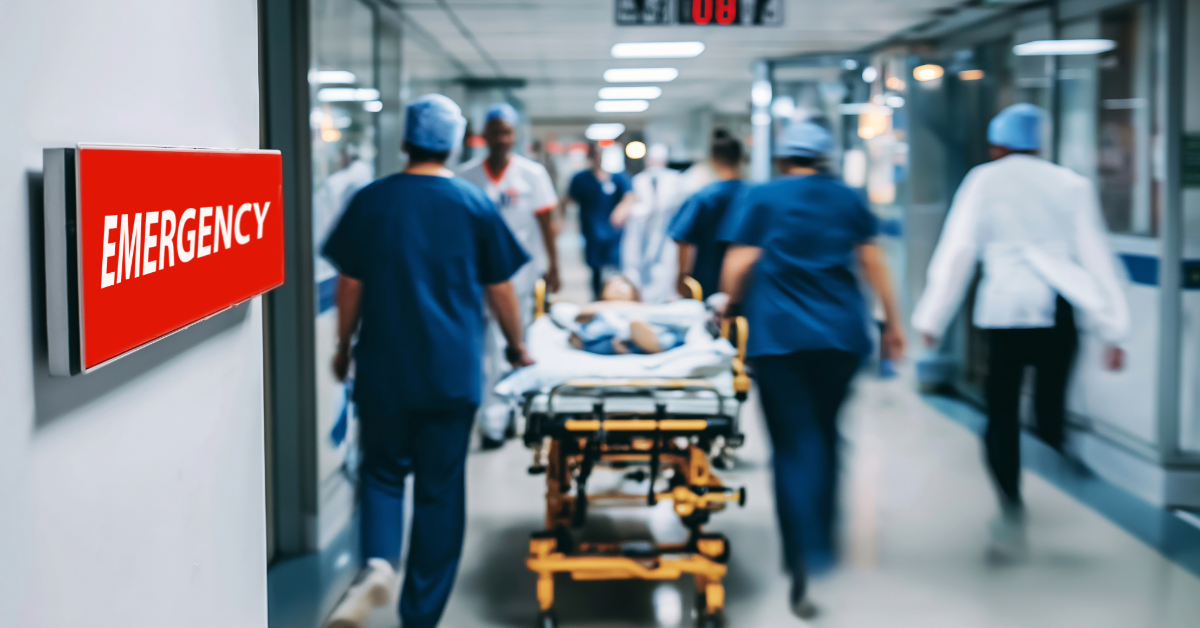
Care team coordination in an emergency department to strengthen emergency department efficiency and reduce wait time

About This Webinar

Five powerful strategies to enhance your rural emergency department performance.
Improving emergency department efficiency requires strong alignment, clear communication, and consistent performance across care teams. By enhancing ED patient experience and focusing on hospital throughput improvement, organizations can reduce delays, improve outcomes, and create high-performing emergency departments.

If you enjoyed this webinar you can register for upcoming sessions here: https://www.customlearning.com/webinars/

Presented by:

emergency department efficiency, ED patient experience, hospital throughput improvement

John Jones

Bruce Lee

  • Rural emergency departments require different strategies than urban healthcare settings.
  • Staffing shortages and changing workforce expectations create operational challenges.
  • Flexible staffing models are essential for maintaining care coverage.
  • Accurate patient placement and documentation improve outcomes and financial performance.
  • Data is critical for managing performance but must be clearly understood by teams.
  • Ongoing education and simulation training improve clinical skills and confidence.
  • Strong leadership sets expectations, builds accountability, and supports teams.
  • Teamwork across all roles is essential for effective emergency department operations.
  • Recognition and appreciation improve staff morale and retention.
  • People are the most important factor in healthcare success.
  • Patients must be treated with dignity and compassion.
  • Staff need to feel valued and supported to perform at their best.
  • Healthcare professionals must prioritize self-care to sustain performance .

The Emergency Department as the Front Door to the Hospital: Strategies for Improving Throughput and Patient Flow by the American College of Emergency Physicians (ACEP).
You can find it here: https://www.acep.org/administration/operations-management

The Complexities of Physician Supply and Demand: Projections From 2021 to 2036 by the Association of American Medical Colleges (AAMC).
You can find it here: https://www.aamc.org/media/75236/download

Rural Health Report by the American Hospital Association (AHA).
You can find it here: https://www.aha.org/rural-health/rural-report

Care Coordination Measures Atlas Update by Kathryn M. McDonald, Ellen Schultz, Lauren Albin, Noelle Pineda, Julia Lonhart, Vandana Sundaram, Crystal Smith-Spangler, Jennifer Brustrom, Elizabeth Malcolm, Lauren Rohn, and Sheryl Davies.
You can find it here: https://www.ahrq.gov/ncepcr/care/coordination/atlas.html

The Importance of Employee Recognition: Low Cost, High Impact by Annamarie Mann and Nate Dvorak.
You can find it here: https://www.gallup.com/workplace/236441/employee-recognition-low-cost-high-impact.aspx

Help Your Employees Find Purpose—or Watch Them Leave by Naina Dhingra, Andrew Samo, Bill Schaninger, and Matt Schrimper.
You can find it here: https://www.mckinsey.com/capabilities/people-and-organization/our-insights/help-your-employees-find-purpose-or-watch-them-leave

Brian Lee: 

Welcome everyone. We’re delighted to have you here for today’s session in our Engage series. The purpose of these sessions is to help improve what you do every day by sharing practical ideas and insights. 

Today, we are joined by Dr. John Jones to discuss how to empower the emergency department, particularly in rural healthcare settings. 

Dr. John Jones: 

Thank you for the introduction. I appreciate the opportunity to be here and share some insights with you. 

Our focus today is on emergency medicine in rural communities. This environment is unique and requires different approaches than urban healthcare settings. 

Our goal is to efficiently and effectively manage emergency departments while: 

  • Providing high-quality care 
  • Meeting operational metrics 
  • Supporting financial stability 
  • Maintaining high satisfaction among patients and staff 
  • Creating a positive culture 

Achieving all of this is challenging, but essential. 

Let’s start with staffing. 

There is a significant shortage of emergency medicine providers. Many have experienced burnout, especially following COVID-19. Additionally, newer physicians prioritize work-life balance, which changes staffing dynamics. 

This means we need innovative staffing models. These may include: 

  • Emergency medicine physicians 
  • Family or internal medicine physicians 
  • Local primary care providers 
  • Residents 
  • Advanced practice providers 

Flexibility and creativity are critical in building effective teams. 

Next, let’s talk about admissions and patient flow. 

It is important to ensure patients are placed in the correct care status from the beginning. This requires real-time support and collaboration between providers and case management. 

Accurate documentation and timely decisions improve both patient care and financial outcomes. 

Now, let’s discuss data. 

Data is essential for managing emergency departments effectively. Key metrics include: 

  • Length of stay 
  • Patient volume 
  • Admission and transfer rates 
  • Patient satisfaction 

Understanding the “why” behind the data is just as important as the numbers themselves. When teams understand the purpose, they are more engaged in improving performance. 

Ongoing education is another critical component. 

Providers must continuously develop skills, especially for high-risk, low-frequency procedures such as airway management or emergency interventions. 

Simulation training is highly effective. It builds confidence, improves performance, and strengthens teamwork among staff. 

Next is leadership. 

Strong leadership sets the tone for the department. Medical leaders must support their teams, communicate clearly, and foster accountability. 

They act as coaches, mentors, and connectors across multiple roles within the hospital. 

Finally, the most important point: people matter.

Patients and their families must be treated with dignity and compassion. 

Staff must feel valued and appreciated. Recognition, communication, and genuine care make a meaningful difference in morale and retention. 

Colleagues must support one another through challenges. Listening and empathy are powerful tools. 

And importantly, you matter too. 

You must take care of yourself in order to care for others. Your work has purpose and impact. 

Dr. John Jones (Closing): 

Rural healthcare teams play a critical role in their communities. With the right support, teamwork, and mindset, you can make a profound difference in patients’ lives. 

Thank you for what you do.

a { text-decoration: none; color: #464feb; } tr th, tr td { border: 1px solid #e6e6e6; } tr th { background-color: #f5f5f5; }

Emergency department efficiency is one of the most critical drivers of organizational performance in modern healthcare. The emergency department often serves as the first point of contact between patients and the healthcare system, making it an essential component of patient experience, operational performance, and financial sustainability. In the “Empowering the ED” session, Dr. John Jones highlights how organizations can strengthen emergency department operations by focusing on staffing, patient flow, leadership, teamwork, and continuous improvement. When healthcare organizations prioritize emergency department efficiency, they create environments that improve outcomes for both patients and staff.

For many hospitals, staffing remains one of the greatest challenges affecting performance. The shortage of emergency medicine providers, combined with increasing burnout and changing workforce expectations, has forced organizations to rethink traditional staffing models. Innovative approaches may include emergency physicians, family medicine providers, advanced practice providers, residents, and local primary care clinicians working together to ensure adequate coverage. Flexible staffing models contribute directly to emergency department efficiency by helping organizations maintain access to care while managing limited resources.

Another important element is patient flow. Hospital throughput improvement begins with ensuring patients are placed in the correct care setting as quickly as possible. Delays in assessment, admission, or transfer create bottlenecks that impact every aspect of emergency department operations. Real-time communication between physicians, nurses, case managers, and admitting teams helps reduce unnecessary delays and supports more efficient decision-making. Organizations that prioritize hospital throughput improvement often see benefits in both clinical outcomes and patient satisfaction.

ED patient experience is shaped by far more than clinical treatment alone. Patients frequently evaluate their experience based on communication, wait times, responsiveness, and how well they understand what is happening during their visit. Organizations that improve communication and establish clear expectations often see significant improvements in patient satisfaction. Even when delays occur, patients respond more positively when they are informed and treated with respect. Strong communication remains one of the most effective tools for improving ED patient experience and maintaining trust.

Data also plays a central role in improving emergency department efficiency. Successful organizations regularly monitor key performance indicators such as patient volume, length of stay, admission rates, transfer rates, and satisfaction scores. However, collecting data is only part of the process. Teams must also understand why metrics matter and how they influence organizational goals. When employees understand the purpose behind performance measures, they become more engaged in improvement efforts and are more likely to take ownership of results.

Education and training are equally important. Emergency medicine often requires providers to perform high-risk, low-frequency procedures that demand both confidence and competency. Simulation training provides a safe environment for developing skills, improving teamwork, and reinforcing best practices. By investing in ongoing education, organizations strengthen emergency department efficiency while also improving safety and quality of care.

Leadership is another major factor influencing performance. Strong leaders establish expectations, create accountability, and support continuous improvement. They serve as coaches, mentors, and connectors for the teams they lead. Effective emergency department leadership focuses on removing barriers, improving communication, and creating an environment where staff feel supported. Organizations that invest in leadership development often experience stronger teamwork, increased engagement, and better operational outcomes.

Teamwork remains a cornerstone of successful emergency department performance. Physicians, nurses, technicians, case managers, and support staff all contribute to patient care. When these groups work collaboratively, communication improves and care becomes more efficient. Team-based approaches support hospital throughput improvement by reducing delays and ensuring smoother transitions across the care continuum.

The session also emphasizes that people matter. Patients deserve dignity, compassion, and respect during every interaction. At the same time, healthcare professionals need recognition, support, and appreciation. Organizations that invest in both patient care and employee well-being create stronger cultures that support retention and performance. Improving ED patient experience begins with creating an environment where staff feel valued and engaged.

Ultimately, emergency department efficiency is achieved through a combination of leadership, teamwork, communication, and operational discipline. Organizations that focus on hospital throughput improvement and prioritize ED patient experience position themselves for long-term success. By creating systems that support both patients and caregivers, healthcare leaders can empower their emergency departments to become highly effective, patient-centered environments that deliver exceptional care.

Join our upcoming webinars

Turning Strategy into Action: A Real-World Service Excellence Journey

Beyond the Hire

Beyond the Hire: Building a Workforce That Stays

The Weight of Your Words: How Leaders Shape Culture Through Language

Interested in learning more?

Contact Us.

FAQ Form